Table of Contents
There are various batteries available for golf carts including traditional lead acid batteries, AGM batteries, lithium ion batteries; among which lithium ion batteries are increasingly popular and preferred. Choosing the right golf cart battery makes great difference for your cart’s performance, reliability, and lifespan; it’s crucial important to have deep understanding of different batteries’ pros and cons. This comprehensive article will guide you through analyzing various golf cart batteries and help you know to make the best decision.
1. What’s 12v Golf Cart Batteries?
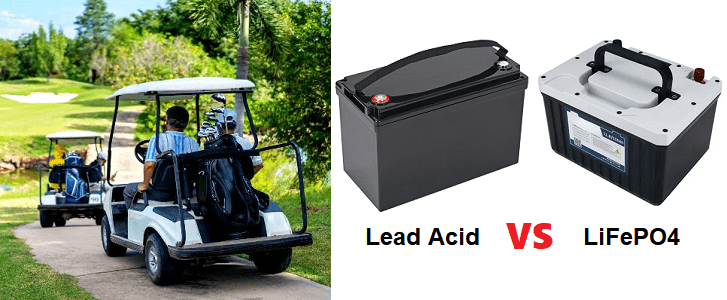
12v golf cart batteries refer to batteries designed to power electric golf carts which operate on 12 volt voltage. And commonly there are lead acid, AGM and lithium-ion battery types. These batteries provide steady 12 volt output, which is one of the common voltage ratings for golf cart batteries. For many golf carts, multiple 12V batteries are often connected in series to enlarge voltage for bigger output requirement, which can be 24V, 36V, 48V, or even higher.
2. Different Golf Cart Battery Types
There are several types of 12 volt batteries available for golf carts: AGM batteries, lead acid batteries and lithium ion batteries. Each battery type has its benefits and trade-offs; it matters a lot to choose the best suitable battery for golf cart well performance as well as long lifespan. You can learn more details from below analysis.
Lead-Acid Batteries:
Lead-acid batteries are the most often used in golf carts for over a hundred years, which produce power through a chemical interaction between lead and sulfuric acid; this reaction creates energy needed to operate the cart. This battery is commonly called “wet” battery because of their liquid mixture of water and acid, which are valued for their affordability and dependability in most standard golf cart settings. However, they do need regular maintenance, such as physical checking and water refilling to avoid acid corrosion—a factor that can otherwise reduce the battery’s longevity.
AGM (Absorbed Glass Mat) Batteries
AGM (Absorbent Glass Mat) batteries represent an advanced design in lead-acid technology. They use a sealed structure with fiberglass mats to absorb the electrolyte, which eliminates the need for routine water refilling, providing users with a low-maintenance solution. However, AGM batteries are susceptible to overcharging, which can lead to damage or complete battery failure, making careful charging management essential.
Gel Batteries
Gel batteries are a type of lead-acid battery in which the electrolyte (sulfuric acid) is mixed with silica to form a thick, gel-like substance. This gelled electrolyte is immobilized, making the battery spill-proof and highly durable in various conditions. Gel batteries are commonly used in applications where reliability and low maintenance are essential, including golf carts, renewable energy systems, marine vehicles, and mobility scooters. They handle extreme temperatures well, and resist deep discharges. However, they’re more expensive and sensitive to overcharging.
Lithium-Ion Batteries
The most notable advancement in 12v golf cart battery technology stems from lithium-ion batteries, especially the LiFePO4 (Lithium Iron Phosphate) type. Compared to lead-acid and AGM batteries, lithium-ion batteries provide significant benefits, including extended lifespan,light weight design, and faster charging time. Leading golf cart manufacturers, such as EZ-GO and Club Car, now more often adopt lithium-ion batteries as standard equipment in their latest models. These batteries often last 4 to 6 times longer than lead-acid options, delivering a reliable & steady performance for golf cart owners. Additionally, they come equipped with an integrated Battery Management System (BMS), which safeguards against issues like overcharging, over-discharging and short circuit. Though lithium-ion batteries have a higher initial cost, their resilience and superior efficiency make them more preferrable 12v golf cart battery choice.
3. How to Choose Golf Cart Batteries?
3.1 Voltage and Capacity Requirements
To make clear of your golf cart’s voltage requirements, usually 12V, 36V, 48V, or higher. This can be achieved by connecting multiple 6V, 8V, or 12V batteries in series to meet the total voltage.
And understand how long you need the battery operates, which determines the battery’s capacity(in ampere-hours). A higher capacity means longer running time. Match the Ah rating to your demands—higher for long distances or heavy loads, lower for casual or short trips.
3.2 Battery Maintenance Needs
Maintenance-Free Options: AGM, gel and lithium-ion batteries are maintenance-free and eliminate the need for water refills. They are suitable for users seeking convenience and less upkeep.
Flooded Lead-Acid Batteries: Require regular maintenance, such as physical checking and refilling water levels. They are typically less expensive but require diligence in upkeep to prevent corrosion and extend lifespan.
3.3 Weight and Space Considerations
Lithium-ion batteries are lighter, which can enhance cart speed and efficiency. Lighter batteries are particularly advantageous if your cart is used for long distances or off-road conditions.
Ensure the battery size fits your cart’s battery compartment, as some lithium models may be smaller than standard lead-acid batteries.
3.4 Budget and Long-Term Costs
Initial Cost vs. Long-Term Value: Lead-acid batteries have a lower upfront cost but require regular maintenance and have a shorter lifespan. Lithium-ion batteries are more expensive initially but require minimal maintenance and have a longer lifespan, often proving to be more economical over time. Especially some professional manufacturers like AK POWER offer not only cost-effective lithium golf cart battery solutions but also 10 years warranty.
3.5 Cycle Life
Cycle life, or the number of charge/discharge cycles a battery can undergo before its capacity drops significantly, is higher for lithium-ion batteries, often lasting 4-6 times longer than lead-acid batteries. If you use your golf cart frequently, a higher cycle life will provide better long-term value.
3.6 Warranty and Support
Choose a reputable brand that offers a good warranty and reliable support. A robust warranty can be crucial for ensuring quality and longevity, especially given the investment in lithium-ion batteries.
4. Advantages of 12V Lithium Golf Cart Battery
A 12V lithium golf cart battery offers numerous advantages over traditional lead-acid batteries, making it an increasingly popular choice for golfers and cart owners. Below are the key benefits of choosing 12v lithium-ion batteries for your golf cart.
4.1 Longer Lifespan
Extended Cycle Life: Lithium-ion batteries typically last 4-6 times longer than lead-acid batteries. They can withstand up to 4,000-6,000 charging cycles compared to 300-500 cycles for lead-acid, depending on usage.
Less Frequent Replacements: Due to their longer lifespan, you’ll need fewer battery replacements over time, making them more cost-effective in the long run.
4.2 Faster Charging
Quick Recharge: Lithium-ion batteries charge much faster than lead-acid batteries. While a lead-acid battery may take 8-10 hours to charge fully, a lithium-ion battery can typically recharge in 1-3 hours, allowing for faster turnaround between uses.
Opportunity for Quick Charging During the Day: With faster charging, you can often top off your lithium battery during breaks, allowing for more frequent or longer use without worrying about battery depletion.
4.3 Lighter Weight
Reduced Cart Weight: Lithium-ion batteries are significantly lighter than their lead-acid counterparts, which can help reduce the overall weight of your golf cart. A lighter cart means better speed, improved handling, and less strain on the motor, which can ultimately improve overall performance.
More Efficient Use of Energy: With reduced weight, the cart requires less power to move, which can extend battery life and make it more energy-efficient.
4.4 Maintenance-Free
No Water Refilling: Unlike flooded lead-acid batteries, lithium-ion batteries don’t require regular water checks or refills, making them completely maintenance-free. This eliminates the need for upkeep, reducing hassle and time spent on maintenance.
No Corrosion Risk: Since there’s no acid to spill, lithium-ion batteries do not corrode over time, unlike traditional lead-acid batteries.
4.5 Better Performance
Consistent Power Output: Lithium-ion batteries deliver a more consistent voltage throughout their discharge cycle. As a result, your golf cart maintains consistent performance, speed, and power until the battery is almost depleted. In contrast, lead-acid batteries tend to lose voltage and power as they discharge.
More Efficient Use of Energy: Lithium batteries are more energy-dense, meaning they can store and use more energy in a smaller size. This results in longer run times compared to traditional lead-acid batteries of the same size.
4.6 Safer and More Reliable
Built-in Battery Management System (BMS): Most 12V lithium-ion batteries come with a BMS that monitors and manages the battery’s voltage, temperature, and charging cycles. This system helps prevent overcharging, over-discharging, and overheating, significantly reducing the risk of accidents, such as fires or battery failure.
Stable Under Different Conditions: Lithium-ion batteries are less susceptible to damage from vibration and are more stable in extreme temperatures compared to lead-acid batteries.
4.7 Superior Warranty and Support
Longer Warranty Period: Many lithium-ion batteries come with a warranty of 5 years, offering added peace of mind. Manufacturers typically provide extensive customer support to ensure you get the most out of your battery investment. Among them, AK POWER provides life-long technical support and extended 10 years warranty for batteries.
5.How to Define A Trusted Lithium Golf Cart Battery Supplier?
5.1 Battery Technology and Performance
Battery Management System (BMS): The presence of an integrated Battery Management System (BMS) is essential for the safe operation of lithium batteries. A reputable supplier will ensure that the BMS is present to monitor temperature, charge cycles, and voltage levels, protecting the battery from overcharging, over-discharging, and other risks.
Battery Specifications: Ensure that the batteries meet your specific needs in terms of voltage, capacity (Ah), and size. The supplier should provide detailed technical specifications for each product.
5.2 Product Quality and Certifications
High-Quality Batteries: A trusted supplier will offer lithium batteries that are durable, efficient, and designed for long-term use. Ensure the batteries meet or exceed industry standards.
Certifications: Look for suppliers who offer lithium-ion batteries that have relevant certifications, such as:
UL Certification (Underwriters Laboratories) for safety standards.
CE Marking indicating that the product meets European Union safety and environmental requirements.
UN38.3 refers to a specific set of testing standards established by the United Nations for the safe transport of lithium batteries.
MSDS typically refers to as an SDS (Safety Data Sheet) under the Globally Harmonized System (GHS), providing important safety and hazard information regarding the handling, storage, and transportation of batteries.
5.3 Warranty and Support
- Strong Warranty: A reliable supplier will offer a robust warranty (typically 5 years or more) on lithium batteries. This demonstrates confidence in the product’s longevity and the company’s commitment to customer satisfaction.
- Clear Terms and Conditions: Read the warranty and return policy carefully. A trusted supplier will offer clear, transparent terms regarding the battery’s expected performance and coverage for defects.
- Customer Support: Ensure the supplier has responsive customer support, ideally with dedicated teams for troubleshooting, product guidance, and post-purchase assistance.
5.4 After-Sales Service and Technical Support
- Installation Guidance: A reliable supplier will offer clear instructions for installing the battery or direct you to professional installers who can ensure a proper fit.
- Ongoing Support: Check if the supplier offers maintenance advice and troubleshooting support for the lifespan of the battery. They should be available for any issues that arise with the battery during its use.
6.Conclusion
When selecting the ideal 12-volt golf cart battery, it’s important to weigh the benefits and drawbacks of each battery type. Although traditional lead-acid and AGM batteries have been dependable choices for years, lithium golf cart batteries stand out due to their superior lifespan, lower maintenance and enhanced performance. Choosing the right battery is key to ensuring your golf cart runs smoothly and efficiently over the long term, delivering an exceptional experience on the course.