
The Ultimate Guide for Pros and Cons of Battery Powered Lawn Mowers
When it comes to lawn care, you may probably face the question: how to choose the right lawn mower?
There is a wide variety of lawn mowers available on the market, each offering distinct advantages and limitations. A common question on the mind is: “Should I choose a battery powered or gas lawn mower?”
With the advancement of lithium ion batteries, cordless lawn mowers have become increasingly popular among homeowners and lawn care professionals; battery-powered lawn mover offers great convenience, instant start, quiet experience alternative to traditional gas-powered mowers.
However, like any tool, they come with both pros and cons. This post will guide you through all the bright and down sides of battery-powered lawn mowers.
Table of Contents
1.What Is Battery Powered Lawn Mowers?
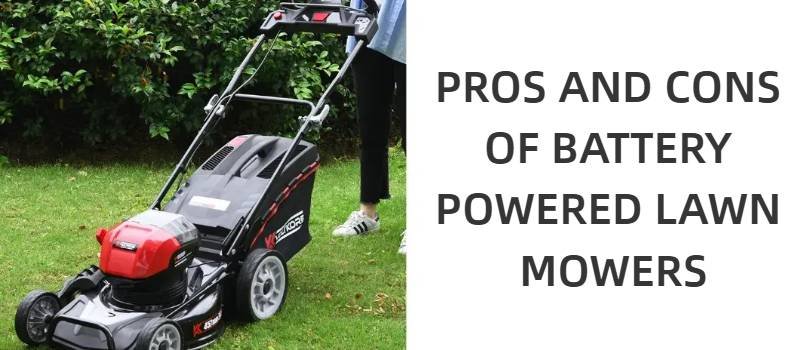
Battery-powered lawn mower is one type of lawn care tools which operate on rechargeable batteries, typically lithium ion batteries. Unlike traditional gas-powered or corded electric mowers, battery-powered mowers are powered by a battery pack, allowing for quiet, emission-free operation. These mowers are preferred by superior convenience, environment-friendly, easy- maintenance.
2.Advantages of Battery-powered Lawn Mowers
Battery-powered lawn mowers have surged in popularity due to their numerous benefits, particularly for homeowners looking for an eco-friendly, low-maintenance solution. Here are the primary advantages of battery-powered lawn mowers.
2.1 Environment Friendly
With battery-powered mowers, there’s no need to store gasoline or worry about fuel spills. This is a major advantage for homeowners looking to avoid the hassle and odor of fuel storage, and it adds an extra layer of safety. Battery-powered mowers are also free from exhaust fumes, making the mowing experience more pleasant and healthier for the user. On the opposite, gas-powered mowers emit carbon monoxide, hydrocarbons, and other pollutants. Choosing battery-powered mowers contribute a lot to cleaner environment and a reduced carbon footprint, aligning with global efforts toward greener earth.
2.2 Quiet Operation
Unlike traditional gas-powered mowers which produce noise exceeding 90 decibels, battery lawn mower works with much quieter performance. It makes them ideal for residential areas where people can do the lawn care works freely from early morning or evening, without worry about bothering neighbors.
2.3 Instant Start&Powerful
In traditional gas mowers, starting often involves priming the engine, adjusting the choke, and pulling the starter cord multiple times, which requires physical efforts as well as time consuming.
In contrast, battery-powered mowers are powered by electric motor, which delivers instant torque to the mower blades as soon as it’s turned on, without any warm-up period. It’s equipped with keyless start system, eliminating the need for a pull cord and making it quicker, easier, and more reliable each time.
Lithium ion batteries have high energy density, which storage lot of energy in a compact size, delivering steady power output over the entire runtime.
2.4 Low Maintenance Requirements
Battery-powered movers require less maintenance than gas-powered alternatives. They don’t need oil changes, spark plugs, air filters, or regular engine maintenance. With fewer mechanical parts, these mowers only need routine battery charging, occasional blade sharpening, and basic cleaning, making them especially convenient for those who prefer a low-maintenance lawn care tool
2.5 Portability and Lightweight Design
Battery mowers are generally lighter than gas-powered models, which makes them easier to maneuver across the lawn and around obstacles like flower beds, trees, and garden decorations. Most battery mowers also come with a push-button start, eliminating the need to pull a starter cord, which can be difficult for some users. Their lightweight design and simple operation make them accessible for users of all ages and physical abilities.
3.Disadvantages of Battery Lawn Mowers
Battery powered lawn mowers provide several benefits for users, but they also come with some notable drawbacks.
3.1 Limited Run Time
- Battery lawn mowers have a limited operationtime, typically around 30~90 minutes for full charge, depending on the model and battery capacity. This brings inconvenience for large lawns or professional long time mowing; for this instance, battery mower requires either multiple batteries or frequent recharging.
- They mayalso lack of power compared with gas mowers, especially in tough conditions like thick, wet, or tall grass, which can lead to uneven cuts or requiring multiple passes.
3.2 Battery Degradation Issue
For long time cycling, the battery’s capacity degrades, reducing run time and performance. After a few years, most batteries needto be replaced, which may bring extra cost. Replacement batteries can cost up to 50% or more of the mower’s initial price, impacting the mower’s long-term value.
4. How Long Does the Battery Last for Running and Cycling
4.1 Battery Running Time
The battery capacity largely decides the run time of a lawn mower; with time passing, it will gradually decrease and would be hard to hold a full charge.
Run Time for 20V Batteries
Typically, a 20 volt battery will provide around 20-30 minutes run time for the mower working.
Run Time for 40V Batteries
With a 40 volt battery, or two units of 20 volt batteries working together, the mower generally runs for 40 to 60 minutes.
What Does This Mean for You?
If your lawn takes longer than 40 minutes to mow, you’ll likely need a mower that uses either a single 40V battery or dual 20V batteries.
For instance, a 60 volt battery on certain cordless electric lawn mowers can offer around 45-60 minutes of run time, though actual performance will vary based on grass density and height.
Overall, run time per charge depends on the battery’s voltage and capacity rating as well as the mower’s power needs. For example, a 40V 5Ah battery can typically deliver 40-60 minutes of run time, subject to cutting conditions.
4.2 Battery Cycling Life
Lawn mower batteries may last around 3-5 years under proper maintenance. This typically means charging and discharging should be operated correctly.
Tips to Prolong Your Lawn Mower Battery Life
Following these guidelines can help extend the life of your battery and ensure it performs reliably.
Charge the Battery Correctly
Always adhere to the manufacturer’s instructions for charging. Avoid overcharging or undercharging, as either can shorten the battery’s lifespan. Using the correct charger is also crucial to maintain batteries in good health.
Keep It in Suitable Environment
In leisure time, store the battery in a cool, dry place. Keep it away from extreme temperatures and direct sunlight to prevent potential damages.
Keep Terminals Clean
Inspect the battery terminals regularly and clean off any corrosion or debris. A wire brush or terminal cleaner can be used to remove any buildup that may affect performance.
Use the Battery Regularly
Frequent use keeps the battery in good condition and helps maintain its capacity. If you don’t use the mower for a short period, fully charge the battery and then disconnect it from the mower.
Avoid Physical Damage
Take care of the battery to avoid dropping or knocking, as these impacts can harm its internal parts and shorten its lifespan.
Replace When Needed
If you notice a significant reduction in run time or performance, it’s the time to replace the battery.
5. Recommended Solutions
Consider the run time of battery powered lawn mowers, there are alternative solutions for maximizing mowing time:
- Choose Extra Batteries: Having spare batteries lets you switch them out as needed, ensuring that you can mow without interruptions.
- Opt for Higher-Capacity Batteries: Choosing models with larger capacity will extend operation time between charges, by which it may upgrade using experience.
- Modify Your Mowing Schedule: By mowing more frequently, you can keep grass shorter, which reduces the overall time needed per session.
When deciding on these options, remember to consider the trade-offs, such as cost and any potential limitations. While battery life is a constraint, these strategies may keep your lawn best throughout the season.